The instruments we use in music therapy can hold a lot of meaning. The choice of instrument and the way in which it is played is unique to each person; it can allow a person to express themselves and their internal world, something which may be difficult to access in traditional talking therapies. In music therapy, we think a lot about the timbre (sound quality) of the instrument, whether it has melodic/harmonic possibilities, rhythm, the potential for volume contrasts and articulations (sustained or detached sounds). We also consider how the instrument feels: is it smooth/textured? Can you pluck strings or press down keys? Can you make interesting sounds by scratching, blowing, tapping etc… I often consider each instrument I use with different clients depending on their emotional/sensory needs. Here are some of my favourite instrument to include in a therapy session:
Guitar/ukulele
The guitar is a wonderful all-rounder. It can be uses as a melodic, harmonic, rhythmic and percussive instrument. It has great sensory capacity through the vibrating strings and the amplification of the sounds as they pass through the body. As a portable instrument, it can be taken round the room, moving with the young person in songs such as ‘this is the way we walk/jump/stomp around the room’. The guitar can be played and enjoyed with no prior knowledge as the open strings sound beautiful and harmonious together making is a highly accessible instrument. I love to accompany songs and nursery rhymes on guitar or ukulele and have supported clients with a variety of physical complexities to play some of their favourite tunes.
The steel pan creates what I like to think of an artist’s watercolour palette of gentle, soothing sounds. This is a lovely instrument to use if a client is feeling less confident about using the instruments in the session as it can be played very quietly with minimal effort but provides a musically sophisticated sound world. This instrument combines beautifully with instruments such as the flute, piano, ocean drum or wind chimes. I have also found the weight of the metal pan effective as it can provide regulating proprioceptive input.
Steel Pan
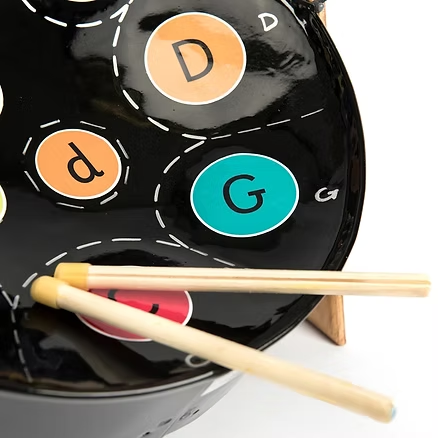
Steel pan used in music therapy for proprioceptive regulation, featuring labeled notes and mallets on a vibrant design.
Train whistle
Drum
One of the most popular instruments in my sessions is the drum. Drums can come in all different shapes and sizes; from small, tambourine style drums to large floor djembes. The idea of a drum, however, is always open to interpretation and I’ve experienced the walls, floors, tables or even our bodies being uses as ‘drums’. Drums are wonderful as they provide us with pulse and rhythm. I like to think of a pulse as a binding agent, a musical gravitational centre that seems to draw everything else to it – it’s very hard not to play with the beat! A pulse can provide a containing structure for young people who might tend to play in a more chaotic way and rhythm can add additional complexity to a simple melodic line, if appropriate. I have used the drum in a turn-taking exercise, to represent rumbling thunder in a sensory story or as an accompaniment to a song or melody.
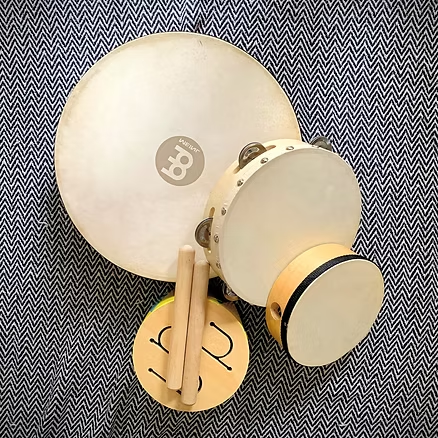
A selection of hand-held drums used in music therapy sessions, showcasing a variety of shapes and sizes to facilitate emotional expressions.